14 June 2012

Guest Post: I just said Hello. Why aren't you giggling?

I asked my friend Jillian Foerster to write a bit about her transition back to the US from her time in South Sudan. Jillian is a volunteer with Brethren Volunteer Service for RECONCILE International. I think I could have listed these same observations after my first semester in West Africa. I returned kind of a crazy woman (but that's another post). It seems Jillian is faring much better.

Only a few days back home and I already miss South Sudan. Several key things have highlighted the difference between my life in Africa for the last six months and my mostly happy transition back to the US.


1. Airport Security. This is probably the best representation of the different worlds I traveled through during my trip back. Perhaps symbolic of the typically disorganized and relaxed mode of operations in South Sudan, the metal detector at Juba Airport was broken (with few attempts to fix it: they’ve started using it to store files) and so the security consisted of a woman briefly looking through people’s bags by hand while she made conversation and joked with her colleagues.

Although the airport in Cairo was a step up security-wise (they had metal detectors and people in uniform) the confusing and contradicting directions I got from the Egypt Air staff didn’t give me confidence that the airline wouldn't lose my checked luggage on my return flight, as it apparently has for so many other people I know.

My short layover in Frankfurt affirmed my reentry into the Western world, or at least German efficiency. Not only did I successfully make it to my flight on time --after being chosen for a random security search and frantically helping a Polish man find baggage claim-- but some man working for the airline approached me and conducted a quick survey with me on his smart phone while I waited in line to board. And I was worried about only having 20 minutes to get to my gate…

Silhouette by Claudio Matsuoka, on Flickr
Thank you, Western Airport.
Creative Commons Attribution 2.0 Generic License  by  Claudio Matsuoka 


2. Mannerisms and Social Interactions.
Here are things I’ve been trying to tell myself since I’ve returned to help me readjust back to my “native” culture: Keep your hands in your pockets. Not everyone wants to shake your hand (or just hold hands for several minutes like the Sudanese do). Don’t invade people’s personal space as much. Also, remember to speak in complete sentences in English.

There are some things I wish the hospitable and friendly South Sudanese would export here. Why can’t I just get Americans to smile or giggle by just saying hello to them???
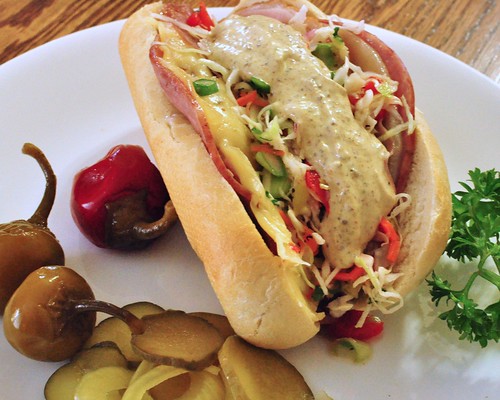
3. Salami. While in South Sudan, I watched way too many pirated episodes of The Sopranos saved on someone’s hard drive. The characters just wouldn’t stop talking about Italian sandwiches.

Mmm... salami, ham, and cheeses on a hoa by jeffreyw, on Flickr
Just. Stop. Talking.
Creative Commons Attribution 2.0 Generic License  by  jeffreyw 

4. Paved roads. [See picture]. This is more desperately missing access to rural areas, but driving within Yei is also an experience. Driving and multi-tasking isn’t an option. With all the reckless boda-bodas (read: motorcycles), chickens, goats, dogs and children constantly darting in and out of the roads in town, it’s impossible to fiddle with your iPod and not hit something/someone and inflict the wrath of mob justice that isn’t in your favor.

5. Lawn mowers.
They go a lot faster than slashers. My Nigerian classmate at EMU marveled the other day at this and understood it as an example of how organized American society is.


Since coming back, I’ve noticed that I’ve become a bit more patient with people and I developed a heightened ability/habit of schmoozing with random service people, since this is a necessity to get answers or things done in South Sudan. This also means I basically flirt with everyone who sells me something.

I’ll enjoy the convenience (and bars with actual good beer) and direct communication while I’m Stateside. I don’t miss people yelling at me and calling me kawajah on every walk I take into town, but I’ll miss the humor, warmth and sense of camaraderie and welcome. Although I was only there for six months, I still felt at home and I can’t wait to go back in July for another year and half.

Anyone else remember your transition between the Western and non-Western worlds? I get tripped-up every summer when we go back to using a debit/credit card in stores. There's usually this awkward pause when I have no idea how to complete a transaction. So I try to hand over my card and then the clerk gives it back with this look of, "Just swipe your own card you dum dum."

8 June 2012

Friday List!

Sarah's List:
 
Tomorrow morning begins the big trek home for Famille Sensamaust. Funny I just found this list of the 10 Worst Airport Terminals. I go through two of these on an annual basis (Nairobi and Paris). And I can say for sure that all 10 of these airports look like the Taj Mahal next to Kinshasa's N'Djili. We really should do a post about that cattle barn of an airport. I think my proudest moment of coordination was pumping in the "bathroom" there with no running water, a door that didn't shut and a stall with every inch covered in untouchable, unidentifiable substance. Oh and Congolese women shouting outside in French, "What's she doing in there!?"


Though we try not to get too political, c'mon this is us here. Is Israel the new South Africa?


I knew the vaccine ruse was a bad idea! How killing Osama bin Laden may have derailed eradicating polio. The polio outbreak in Republic of Congo (our neighbor across the river) is mentioned here. Last year when Adam and I got back from there, I was cornered at the port on the DRC side while some guy tried to give me a polio vaccine, despite the fact that I was hugely pregnant and already vaccinated. Thanks Rotary Club.


This looks like a really fascinating documentary. Have corporations really taken over everything?


No children? No problem! Child free women explain themselves.

Charlotte chipped her two front teeth this week. Remember this list of things NOT to do before we leave. And to think the Mamas were afraid of facial bruising and mosquito bites. You should have seen the look on Mama Youyou's face...

And Tony, everyone agrees. You need to come to Congo. Remember this?

Jill's List:

I've been following the notes of children's book illustrator, Sophie Blackall as she is introduced to Congo this week.  Apparently she's teamed up with The Rubella & Measles Initiative to develop a series of illustrations showing the plight of children in the DRC suffering from these illnesses.
 “I can read that 380 children die a day globally from measles, and yet, as I wave my own healthy children off to school in the morning, I cannot possibly imagine the truth of this until I see it,” said Ms. Blackall. “I love making pictures that encourage children to turn pages or that cheer up subway commuters, but I've never worked on pictures which might conceivably save lives. I am very pleased to contribute to the Measles & Rubella Initiative’s effort to do just that.”


We're flying to BRU and then, IAD. beginning Sunday night.  Our second flight is on United.  I'm trying really hard to get over a deep feeling of disappointment fueled by extreme Euro carrier bias.  Sarah keeps talking about her double decker AirFrance flight with a 24-hour snack bar.  Whatever.  Maybe United will strike.  That should be just as fun as a European luxury long-haul, right?


Making final arrangements for LouLou to attend French Montessori preschool next year. Elias is going to have to get even better at sibling rivalry au Francais"Arrête!" and "Laisse!" will be a little too elementary soon.


Hilariously accurate article for those of us finding ourselves needing to shop for underthings in the training bras section. 


Planning on feasting on this menu upon our return to Harrisonburg next week.  (Can't wait to try the desserts made my our lovely friend, Rachel.)


And...cannot wait to visit this beauty (co-owned by the above friend):
Maybe they'll let me order in French? That would be an example of really inappropriate expat behavior...


However, I might just have to make this to tide me over until next week.

And.  Speaking of food.  I really agree with these tips.

________________

We are planning to keep up a 3x/week posting schedule during our Stateside vacation.  Please excuse any delays next week as we get settled in a gorge ourselves on salad and fresh milk.  Yum.

7 June 2012

Best Place in the World to be a Mother: A River Baptism

A few weeks ago a friend described TASOK as a place sprinkled with fairy dust. I couldn’t agree more. It’s fitting that my last post from Congo as we close out our 4th year, is a bit of an homage to the school that brought us here in the first place.

When Charlotte was a baby, we decided to have her baptized here in Congo. At the time we didn’t realize the folly we were about to enter looking for someone to do it. Congo is a place of many missionaries and churches and thus lots of clergy. It’s just that everyone we knew was Anabaptist or didn’t believe in baptizing infants. Thankfully, we finally found a warmhearted, Swedish (is there any other kind?) Lutheran minister who was in town from Brazzaville.

Baby Charlotte

 (In case you were wondering if I had to sneak Charlotte away for her baptism from my Mennonite husband, don’t worry he was all for supporting the Episcopalian in me.)

And so we collected our closest TASOK friends and went to the river at sunset for her baptism.


Sarah gathers water.

Fast forward exactly two years of sunsets later and we did the same thing with little Annaïs. This time we avoided the search for a willing “baptizer” when our friend and neighbor, James, said he would do it.


For Adam and me, times like this will be what we remember most from Congo. Having tiny babies on the other side of the world, in what some think of as the worst place in the world to be a mother, can feel daunting. (Have I mentioned that I cried the entire flight from Nairobi to Kinshasa when we returned with newborn Charlotte? Yeah. The flight attendant actually moved me to the back of the plane. I still claim it was more hormones than fear.)

But once we got back to TASOK, I knew it would be alright. TASOK has a way of gathering the kindest, most caring group of people imaginable. And then they’re happy to truck down to the river to support your family. Oh, and your friend next door, who you met just this year, offers to baptize your baby.

I used to think the community here was trauma bonded, but now I think it's just good people. Good people sharing coffee. Borrowing sugar. Watching your kids when you're sick. Vaccinating them. Teaching them how to fist bump. And leaving lipstick marks on their faces. It's a good place to be.

Adam and I moved to Congo before we imagined having children. But after we saw this community, we knew it's where we wanted our kids to be.

I'll always remember those baptisms by the river as afternoons where you just can't get enough of the beauty. Perfect lighting. River just right. Laughing with comfortable friends. I’m pretty sure in both of our river baptism groups we’ve had Anabaptists, Atheists, Agnostics, Protestants, Catholics and a self-titled “person of the Jewish faith.” Is this place for real?

Fast Forward Two Years: Baby Ani

Baptismal splash fest.


Walking to the river.

Charlotte & Erin

Yes, it is. And that’s why we keep coming back.

6 June 2012

Love the Place You Live - Kinshasa

(This is a post written for the Design Mom series, "Love the Place You Live."  Read more here. )

Our kids are growing up in Kinshasa, Democratic Republic of Congo.


What does it mean to grow up in Kinshasa?

Most people will picture scenes like these, from cameras documenting the developing world:


And these are accurate.  This is what Elias, Charlotte, LouLou, and Ani see everyday.  Life does look like this in Kinshasa.

But, it also looks like this:


photo by Sarah Sensamaust


We live on 40 acres of tropical rainforest.  A few steps from both of our houses is a lush botanical garden.  Full of native ferns, spiraling ginger, flowers, and trees. We are surrounded by people who help us raise our children, and teach us different ways of eating, speaking, and living every day. 

And while we spend loads of time enjoying the really gorgeous things and people that exists in Kinshasa,  the "stark" reality of Kinshasa is also normal to our children.  They wave at military guys with huge guns strapped to their backs.  They don't hesitate to play with kids who would perfectly illustrate a news story on childhood poverty in Africa.  They don't care if their water comes from the tap or from a filtration bucket.

While there is incredible, breathtaking beauty in our place, there is also incredible, breathtaking dirt, hunger, and sadness.  We love this place because we all must see both everyday.  And both become essential to our daily life.  What a life.  What a place.

(all photos by Jill Humphrey unless otherwise linked or noted.)

5 June 2012

Inside a Congolese Home.

It’s always a fun time when you’re invited to a Congolese home. Here's a peek from some of our favorite visits this year.


Homes vary in size and rental cost. I know very few Congolese families who own their own house. Once we visited a friend who lives with her family of four in what I can only describe as reminiscent of a cattle stall. No windows, no floor, one small room poorly made out of concrete. There wasn't even space for furniture. She pays $50 a month. For a house with 2 bedrooms and a living area, the going rate is $150 to $300 a month. This doesn't necessarily include a kitchen or bathroom.

Compare this to what many expats pay for their apartments. $1,000 a month is a very good deal. Some friends pay (read: their NGOs pay) up to $5,000 a month.

No one has reliable electricity or water. Even the nicest house we’ve ever visited (below) isn’t connected to electricity.


In order for this family to tap in to the closest power line, they would have to pay for 100 meters of cable, which costs about $375 (this is more than the average yearly income). After you’re connected, you pay about $10 a month and you might get a few days of electricity out of that.

For the average family, indoor plumbing in nonexistent. All water is carried in and most have little washing stations set up like this one.


Sometimes you can pay to have water pumped to an outdoor spigot. But this costs more than electricity. Five families may split the cost and pay around $7 a month per family. And then they still need to haul water from the shared source, which may or may not be dry.

Since DRC is still lacking in the road department. Houses are located off a skeleton of main roads. You need to bump over some pretty treacherous terrain to get where you’re going. I rank this among Adam's best skills. Somewhere between his expertise at the nose flute and his ability to twist his ankle at least once a month.


And then sometimes after you've reached your destination, you still need to trek a bit. (I always imagine Charlotte hiking through some national park in Virginia and saying, "Yeah this is lovely, but where's all the pretty trash?")


Most houses share the same parcel of land, or dirt really. There can be as many as 5 grouped together, behind the same wall. Everyone’s behind a wall here. Even if you don’t have any belongings to protect. With everyone living together, most things are communal. Even potty time.


Food is prepared outdoors over charcoal.


Standard fare for guests is chicken or goat with aubergine, pondu, bitekuteku, fufu, plantains and pili-pili on the side. There’s always pili-pili on the side!

Our family's enthusiasm for Congolese food is quite a spectrum. Charlotte can't get enough. This weekend when our host served her, Charlotte felt like she was being stingy with her share of aubergines and yelled, "Non, beaucoup!" She then devoured the goat as if it was her favorite food. Except she kept nodding and yelling, "Yum! Chicken!"

Adam loves this type of meal too, but is a little less enthusiastic about goat. He says -and I quote- "Sometimes it's a little too much like eating earlobes." I have to confess, I often do the dance of taking as little as I can and then feeding it to the nearest baby with an open mouth. But as long as I live I'll probably say Congolese chicken is the best in the world. And Congolese hosting is hard to beat too.

Related Posts Plugin for WordPress, Blogger...